

As Nature Tanzania prepares to celebrate its 10th anniversary in September 2026, we are proud to highlight the remarkable achievements of our community champions. These local partners are the heartbeat of our conservation efforts, especially in the Kagera wetlands, where their dedication ensures that both nature and people flourish together.
In the quiet wetlands along the River Kagera, near Murongo village, life continues in harmony with nature. Fishermen cast their nets at dawn, and the graceful Grey Crowned Crane (GCC)—a symbol of beauty and resilience—calls from the reeds. It was here, on 15 January 2026, that a small but important event highlighted the profound impact of our community-based conservation efforts.
A Fragile Discovery
Mr. Jamal John, a local fisherman and dedicated volunteer, was returning from his morning’s work when he spotted something unusual beneath a tree: a small, fragile Grey Crowned Crane chick, alone and motionless.
Jamal was no stranger to conservation; he had been volunteering to monitor the breeding progress of cranes in the area, specifically spotting GCC families and informing the project team, including Nature Project Officer Mr. Leonidas Momburi and our community conservation champions. Wanting to help, Jamal assumed the chick had been abandoned and carefully picked it up. However, he was about to learn a fascinating lesson in wildlife behaviour.
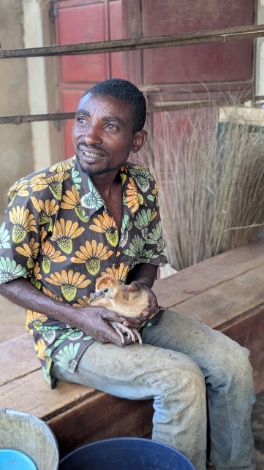
Mr. Jamal John, a local fisherman in Kagera wetlands holding a “rescued” GCC chick.
The Secret of the “Hidden Chick”
Unaware to Jamal at the time, the Grey Crowned Crane has a clever natural defence perfected over generations. Whenever danger approaches, the parent birds quietly hide their chicks and move away, drawing attention to themselves. The chick Jamal discovered was not lost; it was securely hidden away by its parents.
In good faith and acting swiftly, Jamal contacted Rojas Tumuombe, the Community Conservation Champion, and Leonidas Momburi, Nature Tanzania’s Programme Officer. Together, they returned to the exact spot where the chick was found. Observing from a distance, they saw the parents watching over their territory from the reeds—and with them were two other GCC chicks. The family had three chicks all along.
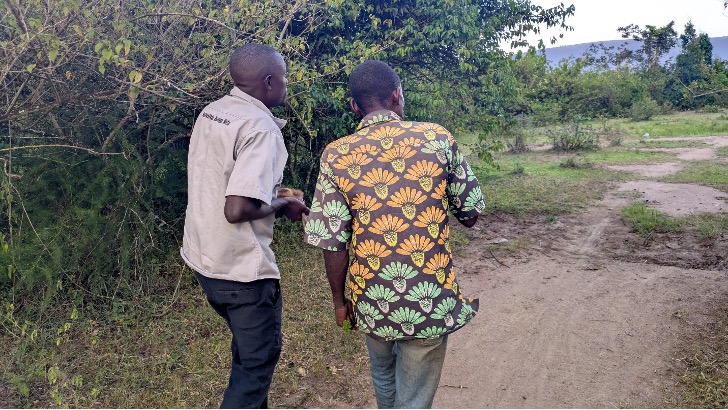
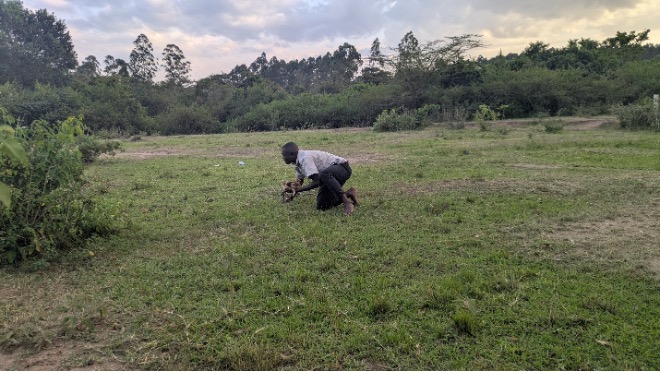
Before release, the rescued chick was ringed with special country-coloured coded rings for future monitoring. With patience and care, Rojas moved quietly through the trees and gently returned the chick to its rightful place. In a moment, the family was reunited, restoring the natural order.
Education as a Conservation Tool
This reunion became a crucial learning experience for the Murongo community. Nature Tanzania explained the cranes’ unique protective behaviour to Jamal and nearby community members, who realised that Jamal’s good intentions had unknowingly disrupted the birds.
This successful intervention results directly from the intensive awareness-raising and environmental education programme conducted by Nature Tanzania in the Kagera wetlands. By using the Grey Crowned Crane as a flagship species, the programme helps conserve not only the Grey Crowned Cranes but also the broader biodiversity of the wetlands. This event demonstrated that conservation is not only about action but also about understanding the delicate behaviours of wildlife.
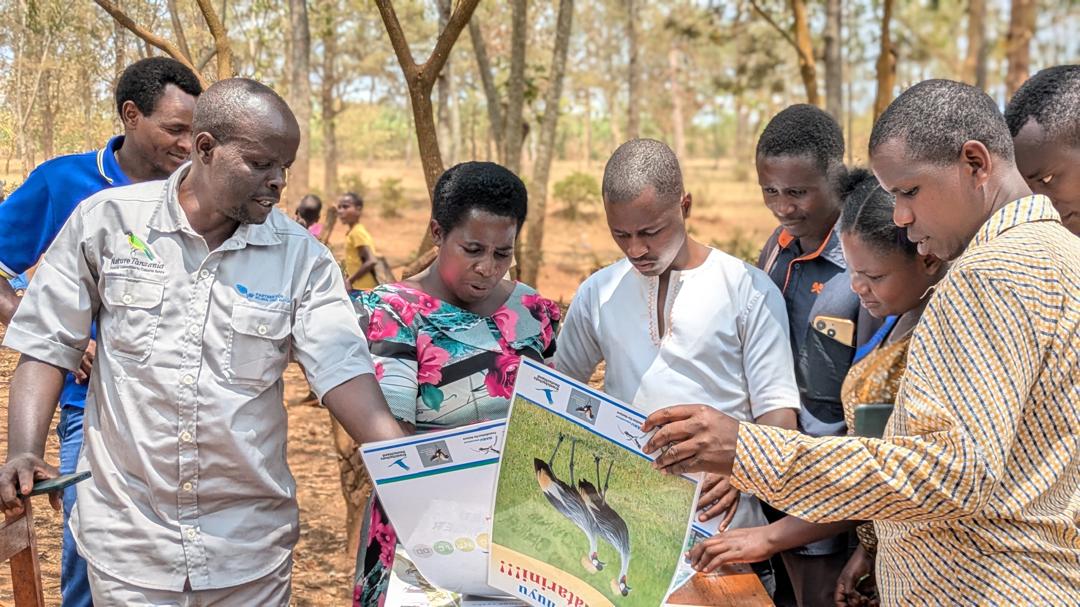
One of the community conservation champions raising awareness among school teachers in the Kagera wetlands.
From Ringing to the First Flight
Following the GCC chick reunion with its family, Rojas Tumuombe and local fishermen continued to closely monitor the family’s progress. The wetland became a place of quiet observation and hope. While the wild is often unpredictable—one of the three chicks was eventually lost to natural causes—the remaining two thrived.
On 5 March 2026, the last remaining chick from the same GCC family was successfully ringed with specific colour codes for monitoring.
The GCC ringing programme allows Nature Tanzania and partners to monitor their survival and movements in the future. The milestone was reached on 20 March 2026, when one of the chicks took a significant step — it fledged and lifted itself into the air for the first time. By 1 April 2026, both chicks were observed to be fully fledged. The once-hidden chicks had grown into strong young cranes, ready to explore the skies above their wetland home.
A Testament to Community Stewardship
This journey, from fragile hatchlings to successful fledglings, stands as a testament to the importance of community-led conservation. Over the last nine years, Nature Tanzania has worked with communities across the country to promote the conservation of species and habitats. These efforts provide vital ecosystem services, including:
- Water purification and regulation: ensuring clean water for local households and livestock;
- Crop Pollination: supporting local agriculture by protecting vital insect and bird pollinators;
- Sustainable Livelihoods: providing resources such as honey through our beekeeping projects;
- Climate Resilience: protecting wetlands that function as natural buffers against extreme weather events.
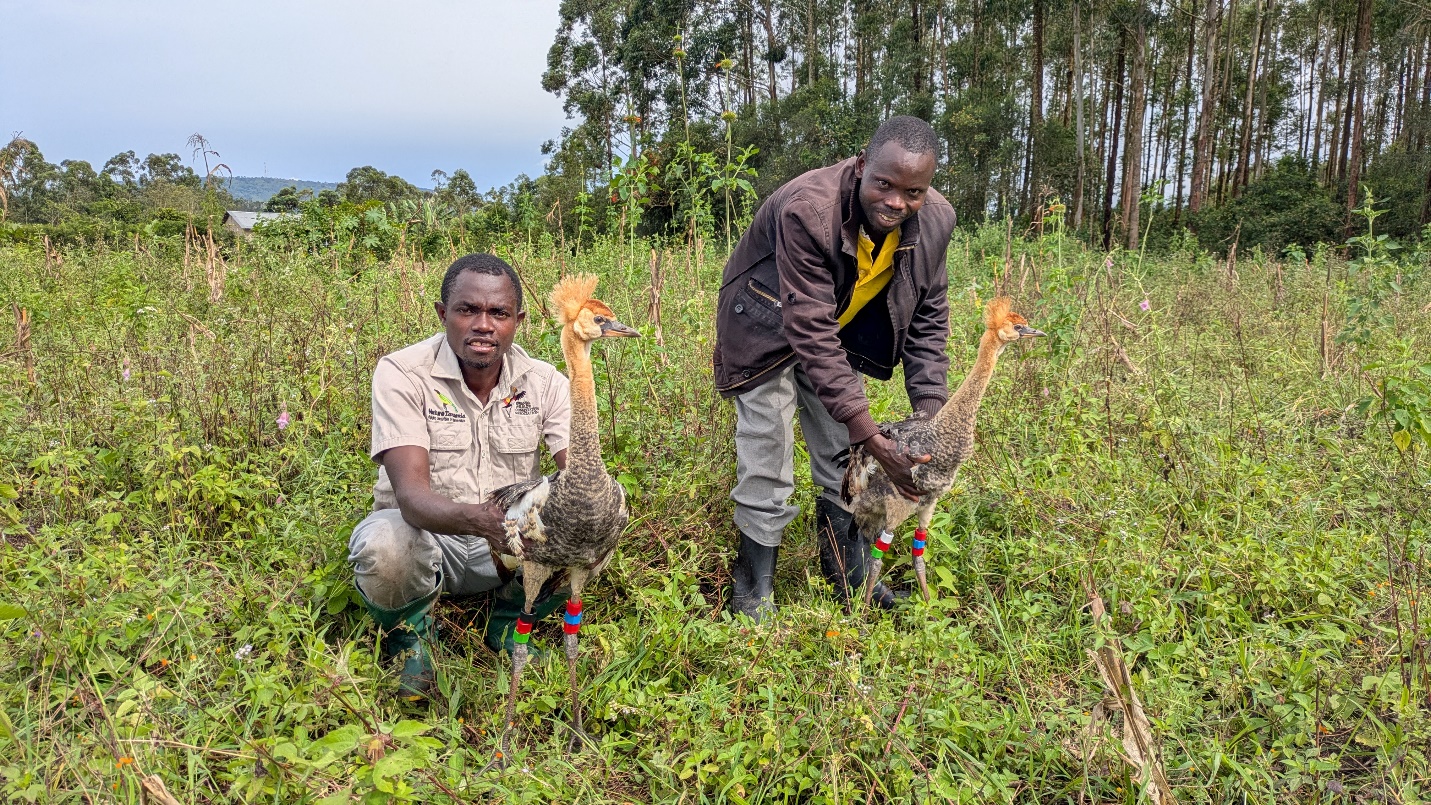
Mr. Rojas Tumuombe (L), a dedicated community conservation champion, continued documenting every stage of the GCC family’s journey. His commitment, alongside the support of local support of local fishermen, reflected the growing role of the community in protecting these graceful birds and their habitat.
Our ongoing community-based wetland conservation in the Kagera wetlands is generously supported by the NABU International Foundation, Partner für Klima und Nature (PKN), and the Rwanda Wildlife Conservation Association (RWCA). We appreciate the Government of Tanzania at all levels, Tanzania National Parks (TANAPA), and the communities in Karagwe and Kyerwa Districts for their ongoing support and collaboration in this conservation programme.