
The Kagera wetlands in northwestern Tanzania, a wide area of papyrus, reeds, and open water, teem with life and serve as a crucial habitat and resource for local communities. Within this lush landscape, the Grey Crowned Crane stands out, with its majestic crest and elegant movements. Yet, these striking birds have faced threats such as habitat destruction, illegal egg collection, and occasional poaching, which have diminished their numbers and lessened the dawn’s vibrant display. Fortunately, hope has arrived, thanks to dedicated community-based conservation efforts by Nature Tanzania.

Despite their beauty, Grey Crowned Cranes are important indicators of ecosystem health and attract tourism.
The Silent Crisis: Threats to Kagera’s Wetlands and Cranes
The vibrant Kagera wetlands are the most critical habitat for the endangered Grey Crowned Crane outside the protected area network in Tanzania. In vast transboundary landscapes, Grey Crowned Cranes face a crisis caused by human pressures. Widespread destruction and biodiversity loss highlight unsustainable resource use. Illegal bird hunting, logging for fuelwood, charcoal, and timber, and burning grass and reeds are common. These actions damage wetlands and threaten wildlife, especially the Grey Crowned Crane, by destroying nests and killing chicks and burning the wetlands. Also, unsustainable farming, fishing, and livestock within the fragile ecosystem are major threats.
A major challenge is the direct exploitation of Grey Crowned Cranes and increasing human-wildlife conflict. Farmers see Grey Crowned Cranes as pests damaging their crops, leading to their trapping and poisoning. Encroachment of farming into wetlands increases interactions, making cranes more vulnerable. Additionally, illegal capture and trade of crane chicks and juveniles for pets, as well as other illegal trade, severely affect the species’ population recruitment. Lack of awareness among farmers and fishermen about the cranes’ protected status, coupled with inadequate law enforcement, worsens the problem.

A Bujuruga – Karagwe wetland has been changed into agricultural land.
Compounding these direct threats are broader, unsustainable agricultural and fishing practices, as well as systemic weaknesses in community-based conservation. Destructive fishing methods, such as the burning of wetland papyrus to open up fishing areas, directly damage critical habitats. Overgrazing leads to extensive soil erosion, while the heavy use of chemical fertilisers and pesticides contaminates the entire wetland environment. Deforestation in the catchment areas alters hydrological regimes, contributing to widespread land degradation and biodiversity loss. The overall effectiveness of conservation efforts is further hindered by inadequate community engagement and ownership, as Village Natural Resources Committees (VNRCs) often lack the necessary capacity and resources to enforce regulations. The collective destruction of wetlands results in the loss of vital ecological services, including water regulation, nutrient cycling, and carbon sequestration, thereby threatening the long-term sustainability of both the ecosystem and the livelihoods that depend on it.
Nature Tanzania’s Call to Action: Empowering Local Guardians
To address these growing threats, Nature Tanzania is actively implementing a conservation project in the Kagera wetlands, focusing on a strong community-led conservation and monitoring strategy. At the heart of this initiative are the Community Conservation Champions, who serve as the eyes, ears, and voices for conservation efforts on the ground, demonstrating a sustainable and cost-effective approach anchored in local ownership.

Some of the community conservation champions participated in regular wetland monitoring and awareness-raising activities in the Kagera wetlands.
About Community conservation champions
Engaging local community members as volunteers to participate in and support species and habitat conservation within their regions fosters local ownership and promotes sustainable, cost-effective conservation efforts. Community conservation champions serve as volunteers with deep knowledge of their local environment and species, incorporating traditional knowledge into biodiversity protection. As members of their communities, they have strong connections that facilitate effective communication and mobilisation. Additionally, they understand cultural nuances and practices that shape conservation attitudes and behaviours.
The project started by recruiting twenty dedicated champions, each with a strong connection to the wetlands and a deep understanding of the local environment. They participated in intensive training sessions conducted by Nature Tanzania staff and other specialists. These sessions were not just classroom lectures; the champions gained practical experience in monitoring Grey Crowned Cranes and evaluating wetland health. They carefully collected data on wildlife populations, habitat conditions, and environmental changes using digital tools, including the Survey123 app on smartphones.
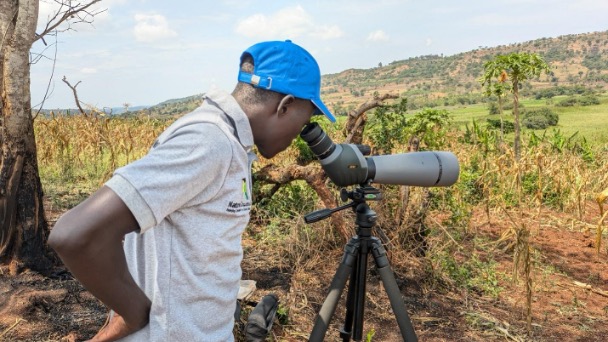
Project Volunteer (James Beebwa) monitoring GCC at Kakuraijo wetlands using a telescope
To assist their essential fieldwork, each champion was provided with a unique uniform, rain gears, and official ID cards. In addition to technical expertise, emphasis was placed on communication skills, helping them to interact respectfully with local communities and collect vital information on threats such as bird trapping, wetland burning, and illegal killings. Their approachable manner helps ensure high-quality data, fosters trust, and promotes a shared sense of responsibility. Over a three-year capacity-building process, champions grow more skilled with each patrol, acting as vital links between the project and local populations.

A community conservation champion (Constantine Ishengoma) making elaboration of posters for teachers at Kakerere Primary School
A Season of Hope: Monitoring and Breeding Success
The champions’ dedicated efforts yielded results during the 2024-2026 breeding seasons. In line with the long rains from November to May—which this year extended into June—the teams closely observed Grey Crowned Crane breeding activities in Kyerwa and Karagwe wetlands along the Kagera River. They employed various techniques, such as watching display behaviours and using drones, binoculars, and telescopes to scan wetlands. As a result, they found and tracked 40 nests and recorded 64 chicks. Five nests faciled as a result of flooding. This comprehensive effort, led by the Project Officer with crucial support from Community Conservation Champions and Project Volunteers, resulted in 34 successfully fledged chicks, while 5 were lost to predation and 2 to poaching; the remaining 23 chicks disappeared, and their fledging status could not be verified.

Image taken by a drone of the crane sitting on the nest at Murongo, Kyerwa

Nature Tanzania project officer on the left side and a community conservation champion (Ericka Joseph – on the right) of Kibingo wetlands, Kyerwa District, on the right side after ringing a Grey Crowned Crane chick.
Additionally, 33 Grey Crowned Crane juveniles were carefully ringed, generating valuable data for long-term monitoring and conservation. This ringing program, based on an East African agreement, uses country-specific colour codes (e.g., Tanzania’s is Red on the left leg) and additional rings for site identification (e.g., blue for Kyerwa, white for Karagwe). Rings on the right leg allow individual identification, aiding detailed tracking. Although Grey Crowned Cranes are not usually migratory, they do show seasonal movements, making this ringing vital for understanding their behaviour and guiding conservation efforts at both the national and regional levels. The Grey Crowned Crane breeding success underscores the positive impact of engaged local communities on the conservation of this threatened species.
Building Bridges: Livelihoods and Conservation Partnerships
The conservation champions are also actively working to reduce human impact on the wetlands by building important partnerships with local communities. A significant milestone was achieved in Chamchuzi village with the signing of a Conservation and Livelihood Agreement (CLA) with the fishermen of the Buragale Fishing Group at Chamchuzi wetland in the Karagwe District. Under this agreement, Nature Tanzania facilitated the construction of a fish-selling centre, a project that, despite current budget limitations, shows a shared dedication. The 300-member fishing community, who often visit the Buragala camp, has pledged to participate in protecting the Grey Crowned Crane and conserving the wetland overall. This site has become a key place for raising awareness, leading to positive outcomes as fishermen share information about new crane breeding events and report illegal hunting activities.

Awareness-raising activities in primary schools are integral to our program in the Kagera wetlands. Here, the project officer and community champion are raising awareness at Chamchuzi primary schools.
To deepen this engagement, champions organise workshops with local farmers, fishermen, and herders to explore and identify income-generating activities that promote acceptance of nature conservation. These sessions, conducted in villages, on farms, and at fishing camps, foster a growing understanding of how livelihoods affect Grey Crowned Crane survival. Farmers and herders have suggested practices like beekeeping, climate-smart agriculture, agroforestry, organic farming, and diversified livestock management. Additionally, former hunters and egg collectors have recommended sustainable fishing methods, such as aquaculture and the development of value chains for fish. These joint efforts emphasise a common goal of creating sustainable livelihoods that support conservation objectives.

Household awareness raising for Grey Crowned Crane conservation in Kyerwa district.

Nature Tanzania appreciates and acknowledges the ongoing support of Ibanda-Kyerwa National Park for community outreach activities, raising awareness of the importance of protecting wildlife and respecting the national park’s boundaries. The collaboration between communities and the national park has improved significantly.

Thanks to the dedicated partnership of local farmers, fishermen and livestock keepers, the Grey Crowned Crane is making a remarkable comeback. By protecting nesting sites and ensuring chicks fledge and adults are not prosecuted in farms and wetlands, we are stabilising the population in the Kagera Wetlands—a landmark victory for community-led conservation.
Fostering Cross-Border Collaboration for Crane Conservation
Nature Tanzania’s dedication to Grey Crowned Crane conservation extends beyond national borders, acknowledging the need for a coordinated regional strategy for these migratory birds. To support this, they participated in the Transboundary Collaboration Workshop held in Kigali, Rwanda, from June 23rd to 27th, 2025. Organised by the Rwanda Wildlife Conservation Association (RWCA), the workshop gathered experts from NGOs and government agencies across Tanzania, Rwanda, Uganda, and Burundi. Its main objectives were to assess the progress of GCC conservation and to develop a strategic plan for cross-border efforts to protect this endangered species. A collaborative strategic plan was created during the workshop to direct joint actions in safeguarding cranes and their wetland habitats, combating illegal trade, and harmonising conservation policies in East Africa. This initiative highlights the importance of international cooperation in ensuring the future of the Grey Crowned Crane.

Transboundary Collaboration Workshop with teams from Tanzania, Uganda, Rwanda and Burundi.
Acknowledgement
We thank the Government of Tanzania for its valuable support and collaboration at various levels, which facilitated the success of this ongoing project. Special thanks to the Tanzania Wildlife Research Institute (TAWIRI) for its technical expertise and for issuing research permits. Tanzania National Parks, through Ibanda-Kyerwa National Park, support and engage in project activities, including awareness campaigns and environmental education. We appreciate financial support from Partner für Klima und Nature (PKN), the NABU International Foundation, and the Rwanda Wildlife Conservation Association (RWCA). Community conservation champions are essential to this project; their dedication and efforts are the foundation of its success. We appreciate the Kagera Regional Secretariat, Karagwe and Kyerwa District Councils, and the ward and village governments within the project regions for their ongoing support. Most importantly, the communities in these areas are the key partners, and their understanding and appreciation are vital to the project’s continued success.
