
By Akshita Rabdiya, Nature Tanzania
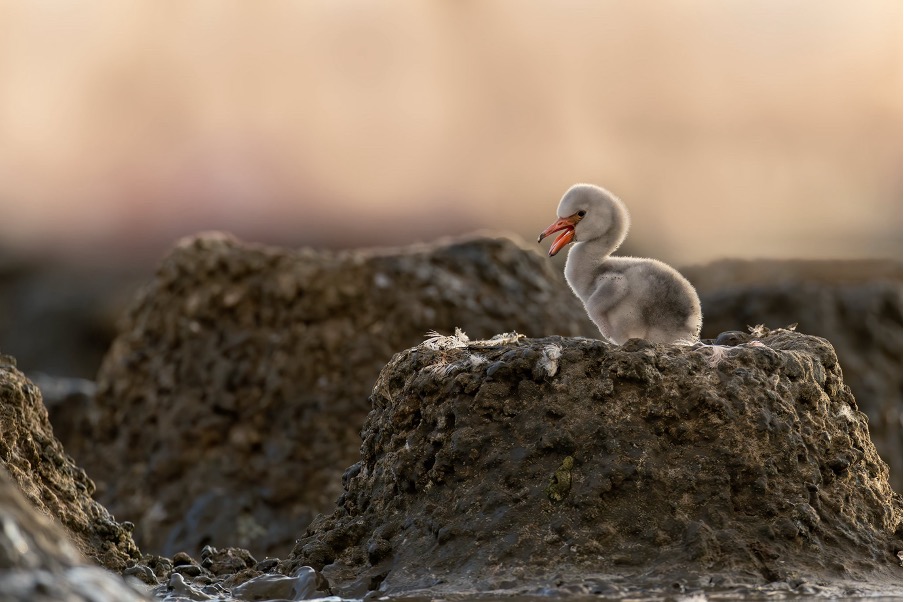
Nestled in the arid heart of northern Tanzania, Lake Natron is one of East Africa’s most extraordinary ecological marvels. Seemingly hostile and alien in appearance, this soda lake is, in fact, the birthplace of life for one of the most iconic and specialised bird species on Earth — the Lesser Flamingo Phoeniconaias minor. Holding more than 75% of the global breeding population, Lake Natron is not just a sanctuary; it is the species’ only regular and successful breeding site in East Africa. Yet, this fragile balance of salinity, temperature, and nesting terrain is increasingly threatened by human activities and climate-induced changes in water chemistry.
At first glance, Lake Natron’s harsh conditions may seem unwelcoming. Its alkaline waters have pH levels ranging from 10.5 to 14, and temperatures often exceed 40°c. However, for the Lesser Flamingo, these very features are a blessing. The lake’s high salinity and alkalinity are vital for supporting dense blooms of Spirulina platensis — a blue-green algae that forms the main food source for the flamingos. This plentiful algae sustains thousands of these birds during their breeding season.
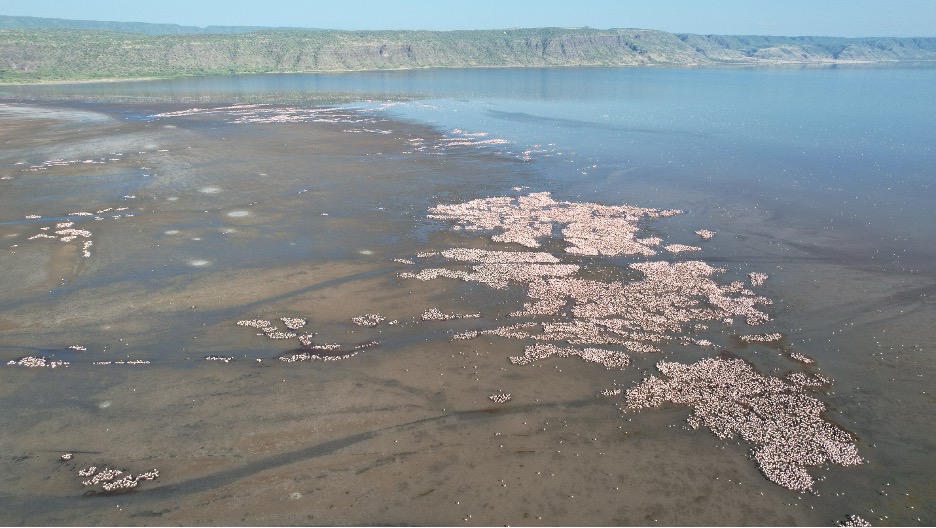
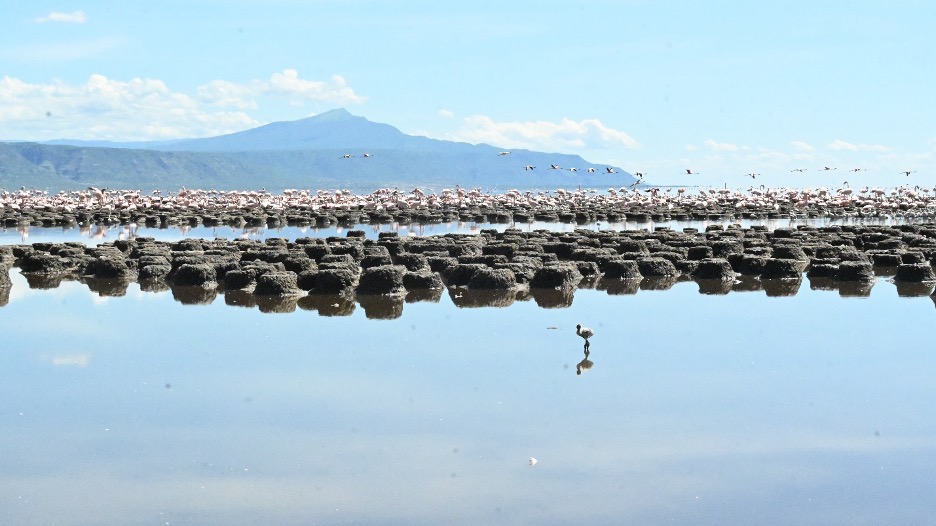
However, food availability is only part of the story. What makes Lake Natron uniquely suitable for flamingo breeding is its mudflats and salinity-driven soil chemistry. During the dry season, when temperatures rise, salts bind the muddy lakebed into hardened crusts. Flamingos utilise this phenomenon to build saucer-shaped mud mound nests, each rising just high enough to protect a single precious egg from flooding or predators. These isolated nests, constructed on tiny islands within the lake’s central zones and sometimes on the shorebeds, offer a level of safety rarely found elsewhere.
Nevertheless, this natural phenomenon is highly sensitive to any fluctuation—especially variations in water depth, salinity, or temperature. Disruption of any of these factors can eliminate entire nesting sites, leaving flamingos without a suitable place to breed. If conditions are unfavourable during the breeding season, flamingos will simply skip breeding for the whole year—a strategy that protects adult survival but risks a long-term decline in the population.
A Single Lake, A Global Responsibility
Because Lake Natron supports 75% of the world’s breeding Lesser Flamingos, any changes here cause ripple effects across the entire African continent. Countries like Kenya, Uganda, and Malawi rely on birds born and raised at Lake Natron to populate their wetlands. While flamingos are nomadic in their foraging behaviour, they are highly site-faithful when it comes to breeding. This means that the fate of flamingo populations across eastern Africa is inherently linked to the survival of Lake Natron’s unique conditions.
Changes in Water Chemistry: The Tipping Point
So, what threatens this vital habitat?
The most urgent issue is the change in the lake’s water chemistry, mainly caused by proposed industrial development and climate-related changes. Rising temperatures, unpredictable rainfall patterns, and water runoff from nearby mountains are already disturbing the balance. Water that is too diluted or too deep during the nesting season can prevent mud from setting, damaging the structural stability of nest mounds. Furthermore, water entering Lake Natron is mostly seasonal, flowing from streams descending from the Ngorongoro Highlands, Gelai Mountains, and Shompole Mountains. Since the lake has no outlet, it relies solely on evaporation to regulate its water level and salinity. Any increase in freshwater input — whether from natural climatic changes or human diversion — can dilute the lake, hindering algae growth and affecting the flamingos’ breeding ability.
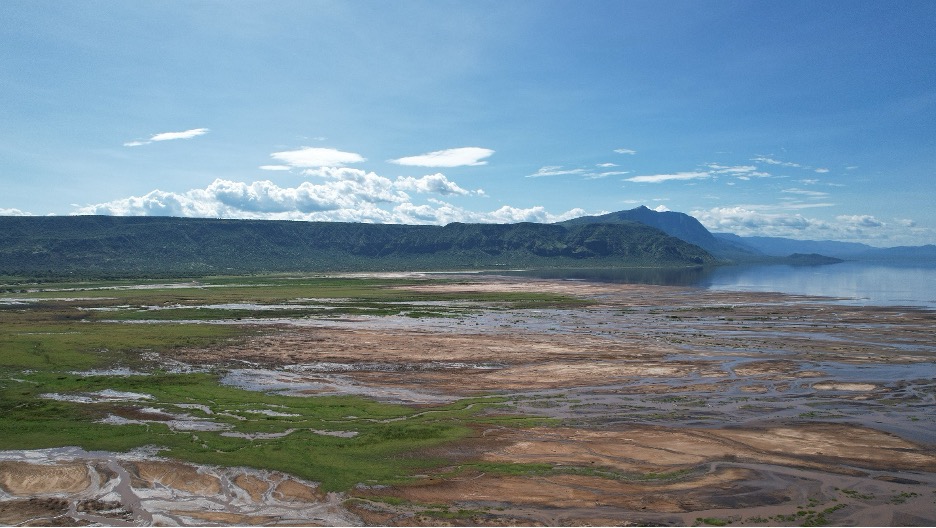
Water Inlet point – permanent Pinyinyi River
Compounding this issue is the proposed development of a soda ash extraction plant, a project that would require millions of litres of freshwater daily. Such an initiative threatens not only the salinity balance but also the entire water input-output equilibrium. If implemented, it could permanently disrupt the nesting process, potentially leading to the extinction of the Lesser Flamingo in East Africa within decades.
More than Flamingos: A Complex Ecosystem
Lake Natron’s importance goes beyond flamingos. The lake hosts at least 56 species of water birds, many of which depend on the saline wetlands, mudflats, and seasonal inlets for feeding and nesting. These include Black-winged Stilts, Pied Avocets, Great White Pelicans, Pink-backed Pelicans, and Chestnut-banded Plovers—all forming part of a delicate web supported by this unique habitat. Around the lake, a mosaic of thorny acacia woodlands and savannah grasslands is visible. These habitats are crucial breeding and foraging grounds for various terrestrial bird species, including Kori Bustards, Grey Crowned Cranes, Black-bellied Bustards, Common Ostriches, and Secretary Birds. These birds rely on the dry season grassland cycles and are especially vulnerable to habitat fragmentation and water abstraction. Like the flamingos, they depend on predictable seasonal patterns and the overall health of the landscape.
Adding to the uniqueness of this ecosystem is Ol Donyo Lengai, an active volcano whose name means “Mountain of God” in the Maasai language. It emits carbonatite lava, one of the rarest types of lava on Earth — black when molten and turning white upon exposure. This geochemical input directly influences the lake’s chemistry. The ash and minerals from Ol Donyo Lengai enrich the lake with sodium carbonate and other salts, contributing to the alkalinity and helping create the ideal breeding conditions for Lesser Flamingos. This natural process has occurred for millennia, establishing a stable ecosystem that can withstand extremes — but only if left undisturbed. Introducing artificial disruptions into this finely tuned system would be catastrophic not just for the lake, but for all the species that depend on its rhythms.
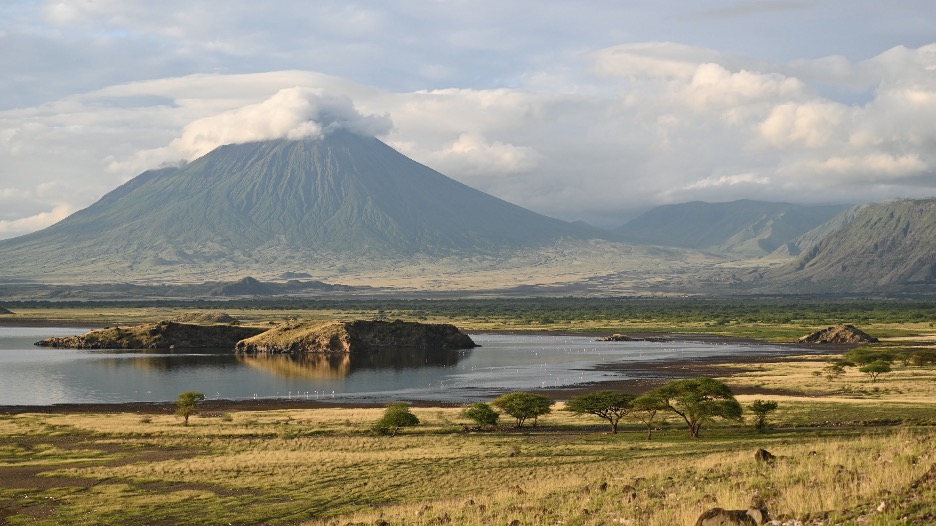
Lake Natron with a view of Ol Donyo Lengai
Conservation: An Urgent Call
Today, the urgent need to protect Lake Natron is more evident than ever. Conservation organisations, researchers, and local communities have all expressed concerns about the imminent threat of unsustainable development. Fortunately, Lake Natron is recognised as a Ramsar Site, a Wetland of International Importance, and its significance has been emphasised by numerous scientific and policy platforms — including global conventions like the Ramsar Convention.But protection on paper is not enough. What is needed now is active enforcement of conservation laws, sustainable water resource management, and community-based involvement in tourism and ecological monitoring. Nature-based tourism provides an alternative, sustainable source of income for local communities and governments, while also encouraging the protection of the lake and its resident species. Efforts are also underway to conduct long-term monitoring of flamingo breeding success, water quality parameters, and land-use change around the lake. These studies help track how variables like water temperature, salinity, and pH fluctuate across seasons, and how these changes relate to flamingo nesting behaviour and chick survival rates.