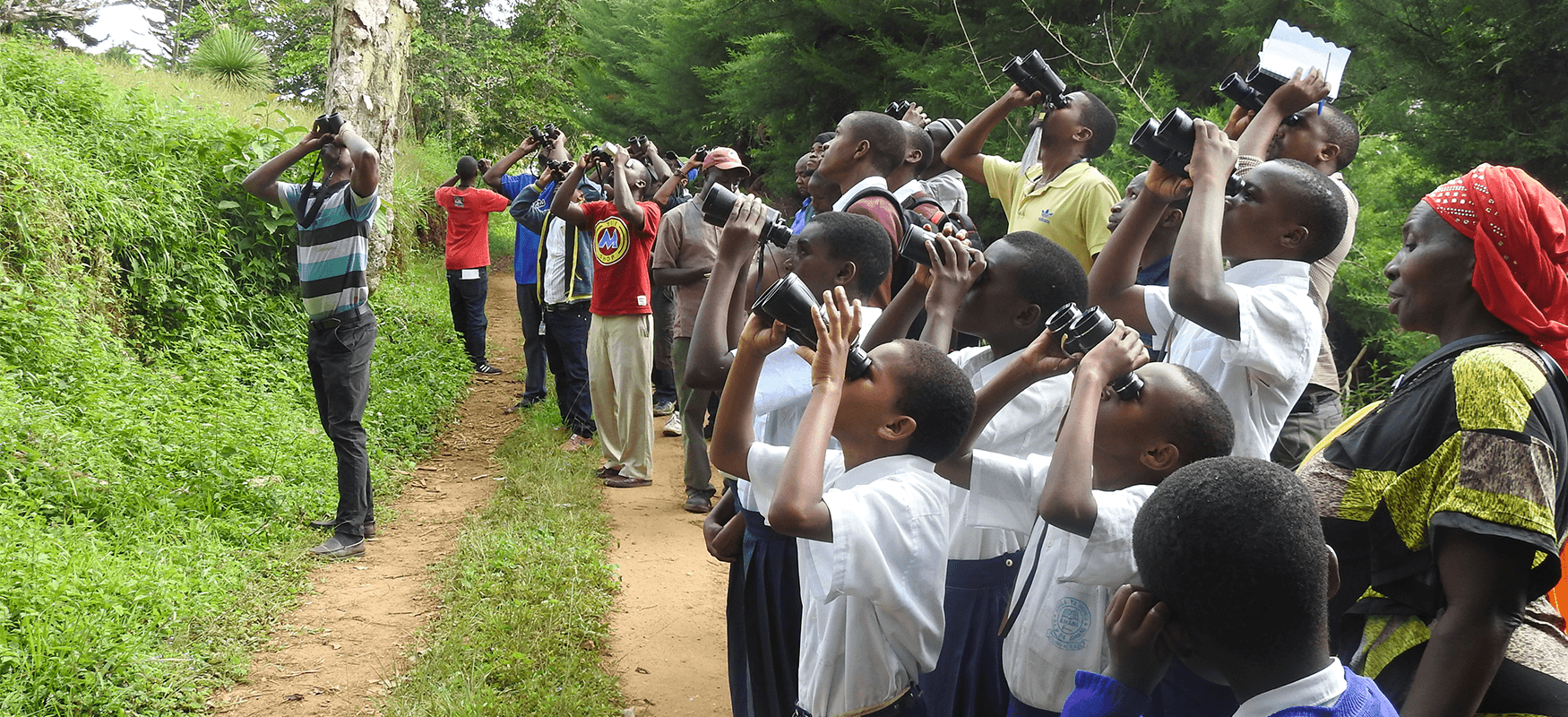
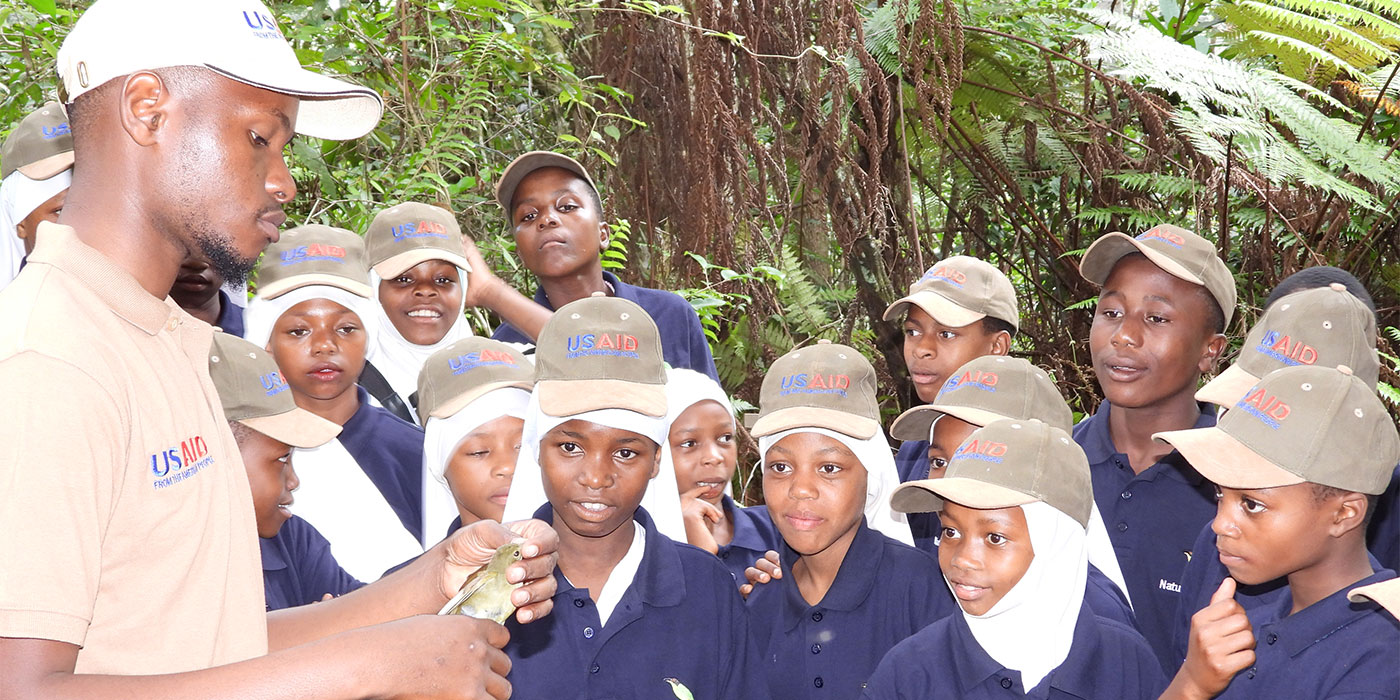
Youths are future leaders and therefore investing in their knowledge is one of the sustainable approaches towards sustainable conservation. We are tehrefore championing education for sustainable development, linked with SDG 4.7, to nurture primary and secondary students to become champions for conservation and protection. This prepare citizens who are concerned and committed to nature conservation and sustainable development.
Six primary schools in Amani-Nilo Forest Corridor (ANFC) have qualified for the green flag of eco-schools. Please join us in celebrating this important milestone. This was achieved as part of the School Environment Education in Derema (SEED) project, funded by the United States Agency for International Development (USAID) through the USAID Tuhifadhi Maliasili Project. The SEED project was a two-year project (June 2022 – June 2024) implemented in six primary schools, i.e. Zigi, Kambai, Kwezitu, Kwemdimu, Antakae, Msasa IBC and two secondary schools, i.e. Shebomeza and Zirai in Muheza District, Tanga region.
The project’s main goal was to develop a youth workforce that is aware of and concerned about
the Amani-Nilo Forest Corridor (ANFC). The project used a student-centred and interactive
approach to learning and teaching to transform schools into learning hubs for natural resource
management and informed decision-making. The SEED project used the eco-schools approach,
therefore implemented the Education for Sustainable Development (ESD) and enhanced school-community collaboration in conserving the ANFC.
Project implementation
During project implementation, six eco-committees (66 members) were formed as the leading structure to support implementing eco-school programs in the schools, especially the eco-schools seven-step framework. Key project achievements/impacts include contributing to improving relationships between the community and schools. This was achieved through school eco-committees. The project successfully introduced the Environmental Education (EE), ESD, Investigation, Vision, Action and Change (IVAC) approach to learning and teaching methods to the six primary schools. By doing so, the project has integrated ANFC and nature conservation into the school curriculum using IVAC (teaching and learning method). The project has raised awareness of more than 1,000 people in the ANFC through radio jingle broadcasting. The project has contributed to improved school ground environments through school ground regreening, therefore contributing to soil erosion control.
The six primary schools were supported with TZS 25,455,600 to establish micro-projects. Three
primary schools are implementing beekeeping projects and tree nurseries by two primary
schools, and one school is implementing avocado and vegetable gardening projects. As part of
outdoor nature education activities, 617 students (352 females) were reached with birdwatching
during the 1st year, and 452 students (239 females) were reached during the 2nd year of the project. Furthermore, 49 students (54 females) were reached with mist netting activities during the 1st project year, while 233 students (115 females) were reached during the 2nd year. In collaboration with the University of Dar es Salaam, we conducted Biodiversity Monitoring (BiMO) training for 14 people (6 females).
As a result of different project activities, a total of 2,298 people (51.3% females) were trained in
sustainable Natural Resources Management (NRM) and/or biodiversity conservation and 2,055
youths (52.5% females) were trained in soft skills through USG-assisted programs. Furthermore,
the project has contributed to increased students’ academic performance (for example, from 56% in 2022 to 86% in 2023 at Kwezitu (source 2022 and 2023 Standard Seven National Exams Results). In May 2024, the Tanzania Green Flag Assessment Jury (TGFAJ) assessed the six primary schools
for eco-schools green flags, and all six primary schools qualified.
Project sustainability
The project’s sustainability is achieved through local structures to enable sustainability, i.e. the
established eco-committees will continue to coordinate supported activities in the respective
schools/villages. The established eco-parliaments will continue to coordinate student’s participation in the eco-schools activities in the respective schools. The government’s ownership of the program will ensure sustainability.
The trained teachers will continue to support IVAC and integrate ESD into school curricula. The established micro-project are expected to generate revenues to run the project following the eco-schools’ guidelines. The schools and community members have replicated activities that address the environmental challenges that were identified during the environmental review, including soil erosion control and tree planting.
Acknowledgement
The project worked closely with various stakeholders, including the President’s Office—Regional Administration Local Governments (PO-RALG), Tanga Regional Government, Muheza District Council, Tanzania Forest Service Agency (TFS), ward and village governments, school administrations, extension officers, students, and community members. We especially appreciate the USAID Tuhifadhi Maliasili Project for its excellent technical support during project implementation. The USAID and USAID Tuhifadhi Maliasili Project are acknowledged for financial support.
Nature Tanzania is collaborating with the Nature and Biodiversity Conservation Union (NABU), NABU International Foundation, Partner für Klima und Nature…
In a recent study funded by [Research Institution], scientists have identified previously unknown pathways in cancer cells, providing potential targets…